Well, I can’t let yesterday’s cricket fiasco pass by without a few words, can I? The blood has boiled after all at the ineptitude of everyone involved in the England – Pakistan ball-tampering incident.
Before the crisis erupted there had been a series of bad decisions from three umpires (amazingly the man who sits and watches replays on TV even managed a howler) and both teams had cause to feel let down by the officials. Certainly the Pakistan team were at fault for staging their protest after tea, but they had cause to be aggrieved: the umpires had failed to explain properly an accusation of cheating.
The events that followed were simply a nonsense (“farcical” would be the wrong word because it implies an element of humour). “Jobsworths” were everywhere and the man who should have stepped forward – England’s captain – missed the opportunity to a) approach Inzamam directly to see if there was anything he could do to defuse the situation, and b) refuse to accept victory in the match by default
Cricket, as everyone knows, is a game which is proud of the term “spirit of cricket”. It is a wonderful builder of bridges and repairer of broken roads. Where the hell was the “spirit” of cricket yesterday? Messrs Hair, Speed and Proctor should be removed from public sight immediately, and Mr Strauss taught that captaining England is a bigger job than organising field placements.
Monday, August 21, 2006
Saturday, August 19, 2006
Grand Central Terminal
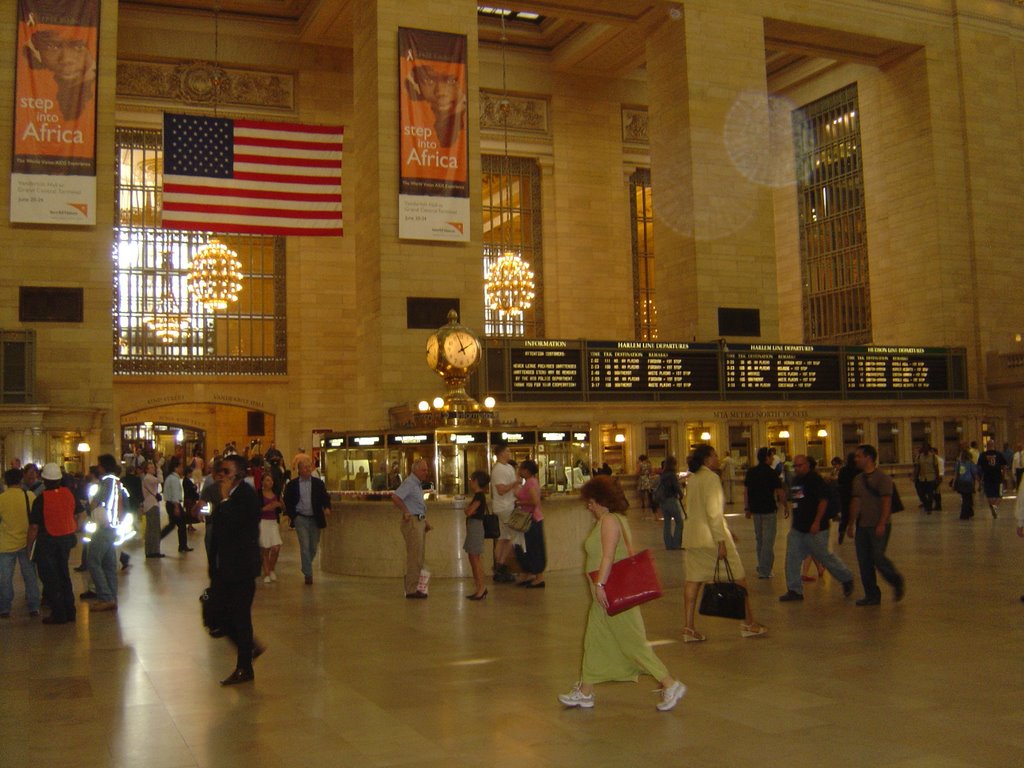 125th Street Harlem, Mount Vernon East, Pelham, New Rochelle, Larchmont - the names of stations on Metro-North’s New Haven line are a happy memory of the trip I made in June to the US Open at Winged Foot. Each morning of the tournament the older brother, the used guitar salesman and I would extricate ourselves from the breakfast table and scramble the couple of hundred yards or so from our lodgings to find our train at Grand Central Station - a train that would take us and our fellow golf fans through the Park Avenue tunnel on our 20-mile commute to our destination station – Mamaroneck. Sometimes the trains would be “specials”, but more often they would be regular service to the consternation and bewilderment of the normal users unused to the appearance of crowds of golf fans en route to the course.
But the purpose of this particular blog is neither the journey nor the tournament itself (which will always be remembered more as the Open that Phil Mickelson and Colin Montgomerie lost, rather than the first that Australian Geoff Ogilvie won). This is about Grand Central Station (or “Terminal” as it is more correctly named).
Grand Central is a film star (North by North West, Superman, Men in Black, etc., etc.), it crops up regularly in fiction, and is used as the backdrop for several TV shows. The station has an extraordinary, cathedral-like Beaux-Arts interior with the famous Information Point and clock at the centre of the main concourse as well as its celebrated “sky” ceiling. The exterior was once prominent but is now pretty much dwarfed by surrounding office blocks. It handles around 700,000 people per day which is about double the number at London’s Waterloo. It covers a much larger acreage and the tracks, assorted waiting rooms and apparatus sink about 10 storeys below ground level. In the 1970s it was very nearly pulled down as part of a major development plan but was thankfully saved following huge public pressure backed by the likes of Jacqueline Kennedy Onassis. In 1998 a complete restoration project was completed and it is now one of the most impressive railway stations in the world.
What is particularly good about the station is the complete absence of clutter. At Waterloo the concourse is crowded with kiosks, temporary information desks and stalls selling the Evening Standard. It is difficult to move through the crowds of people trying to figure out train movements on the poor TV monitors and there is a total lack of style. Grand Central on the other hand is marvellously open, free of clutter and, as for style, New York’s finest just oozes the stuff. Instead of the ubiquitous Burger King that dominates Waterloo you are offered an Oyster Bar and Restaurant (which has traded continuously on the site since 1913). More trendy and modern eateries include an outpost of the Cipriani (Harry’s Bar) empire on a balcony overlooking the main hall. Here it was that the used guitar salesman, the older brother and I frittered away a fistful or two of dollars on pasta, bellinis and carafes of wine while watching the comings and goings.
There are no commercial advertising hoardings on the concourse at Grand Central. A huge American flag was installed after the World Trade Centre attacks, but that rather adds to the feel of the place. It makes you wonder if London can ever do the same. I quite like Marylebone Station and the Liverpool Street Station redevelopment was good until the clutter crept back in. I’ll reserve judgment on the new-look Kings Cross and St Pancras and only hope that they will be as easy-to-use and pleasing-on-the-eye as New York’s finest. Meanwhile I feel like checking out Milan, St Petersburg and a few other great stations, but they are for another year.
Friday, August 18, 2006
Knocked Out
The NHS are building a vast new mortuary at the Queen Alexandra Hospital in Cosham (just outside Portsmouth) and it was the building footprint that I could see from my Day Patients Clinic ward as I waited for my hernia operation on Wednesday. They’ll have it ready for me by 2009 together with the rest of the hospital’s £200 million redevelopment. Quite a change from the small military hospital which first appeared on the site around 1904 – linked to Portsmouth centre by a tram service.
The surgeon reckoned that I might become argumentative so changed the plan to do me under a local anaesthetic and ordered the full knock-out general anaesthetic instead. He was probably right, but it does leave me rather ignorant about what went on. I just woke up an hour after going into the theatre with a large plaster on my tummy and (to my relief) my pubic hairs still intact. A cup of Nescafe and a slice of marmite toast later I was whisked away by my two responsible adults (the wife and sister-in-law) and driven straight to my place of work to process the day’s orders. Not much of a story in that!
The considered opinion is that I shouldn’t operate heavy machinery for a while, or make any major decisions. So the lawnmower remains unused and I’ll hang on to the wife and cat for the time being. There is also the thing about lifting things. It was very sensible to have the hernia done in August when things are quiet at work and typical of my customers that two “eighty-plus” book orders have rolled in immediately after the operation. The poor wife (with her injured foot) is acting as my “porter” for the time being and trundles after me down the corridors at work laden with parcels, briefcases, packing materials, etc., etc. I feel quite Victorian about it all, although I do get some strange looks from other workers on the premises.
Anyway, the forty-eight hours are virtually up so I’m off to have my first permitted (but shallow) bath – to the huge relief of the wife and the cat


Wednesday, August 09, 2006
Neglect and Sour Grapes
 It has been an odd year. I started out in January with the intention of blogging regularly but then, around mid- March, I started suffering from bloggers’ cramp, or blogger’s block or whatever. There has been no lack of material. If anything I have had too much to blog about – Irish car rental costs, Grand Central Station in New York, Colin Montgomerie, Monty Panesar, the cursed hot weather, the older brother’s disguise (short trousers, dark glasses and a baseball cap), staff reductions (I’m on my own now), the World Cup, and the wife’s poor foot (still encased in an inflatable boot while recovering from an operation).
My sincere apologies are due to the two or three poor souls who try to read the “ranting nappa” on a regular basis. I hereby resolve to try and blog better and to blog more often. I might even try and backtrack on matters such as Grand Central Station.
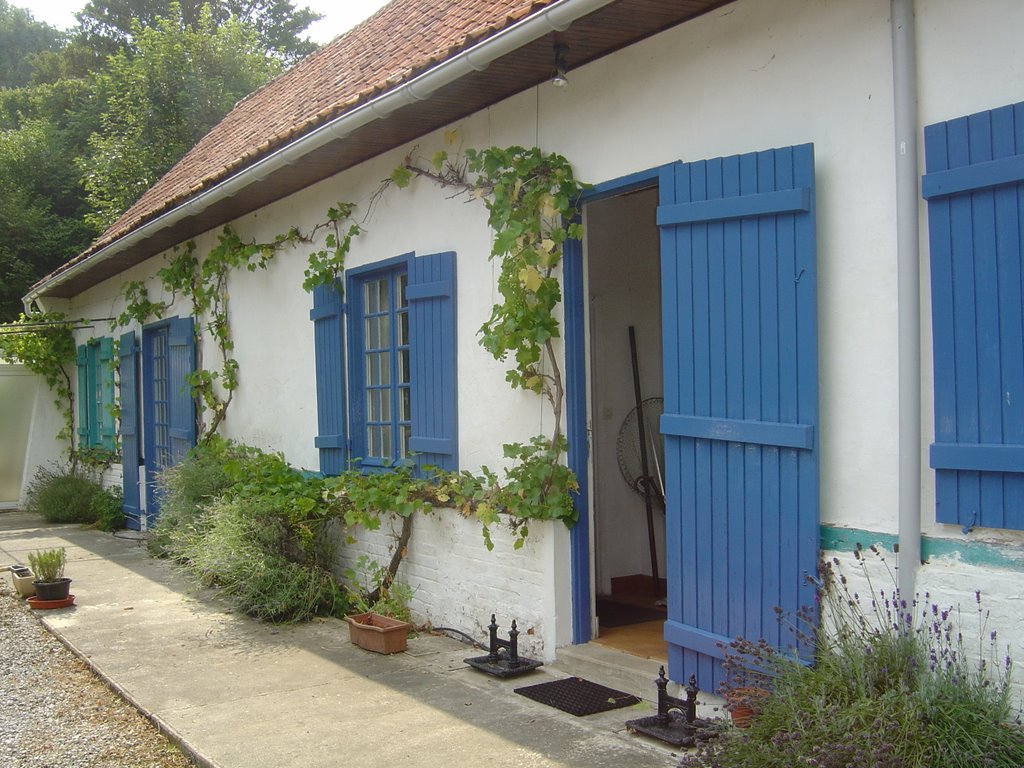
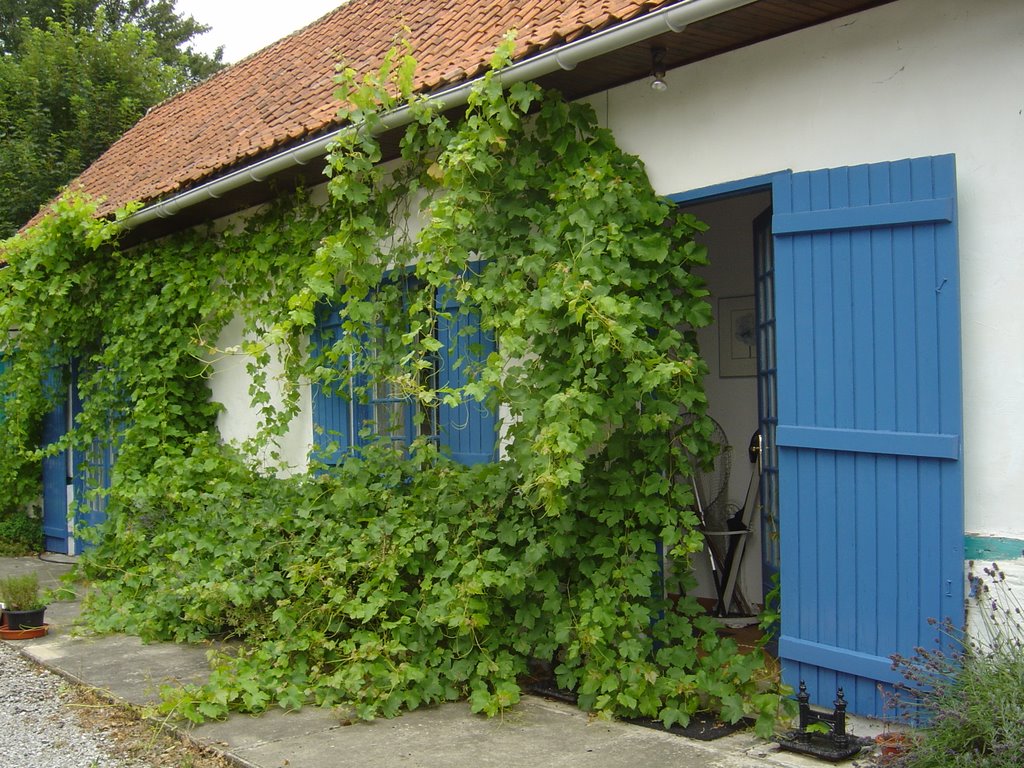
Rather than relaxing, the weekend was spent pruning vegetation, collecting up more than one hundred arachnids of one sort or another from inside the house and creating a rather impressive bonfire. By the time we left on Monday morning the house looked a little bit more respectable.
Fortunately blogs don't require this degree of maintenance, but I'll try and improve on the regularity my postings in future.
Monday, May 08, 2006
Blue Willy
Sorry if I’ve been suffering from blogger’s block (or whatever) these past few weeks, but I’ve had other things on my mind. Like paint!
Friday, April 21, 2006
Spring and the Trouble it Brings
We were tipped off by a local Irish couple late on the Saturday night of our weekend break.
We (the wife and I) were in a Dingle pub enjoying a fairly lusty sing-along of Irish ballads, most of which seemed to be anti-English to some degree or other, when the information came through, “You know that the clocks go forward tonight”.
Come the autumn I’ll try to make sure that I’m home when the clocks go back again.
Thursday, March 30, 2006
Ring of Kerry
 We may sometimes think that the Irish are a bit bonkers, but they in turn must surely wonder at the eccentric behaviour of English tourists.
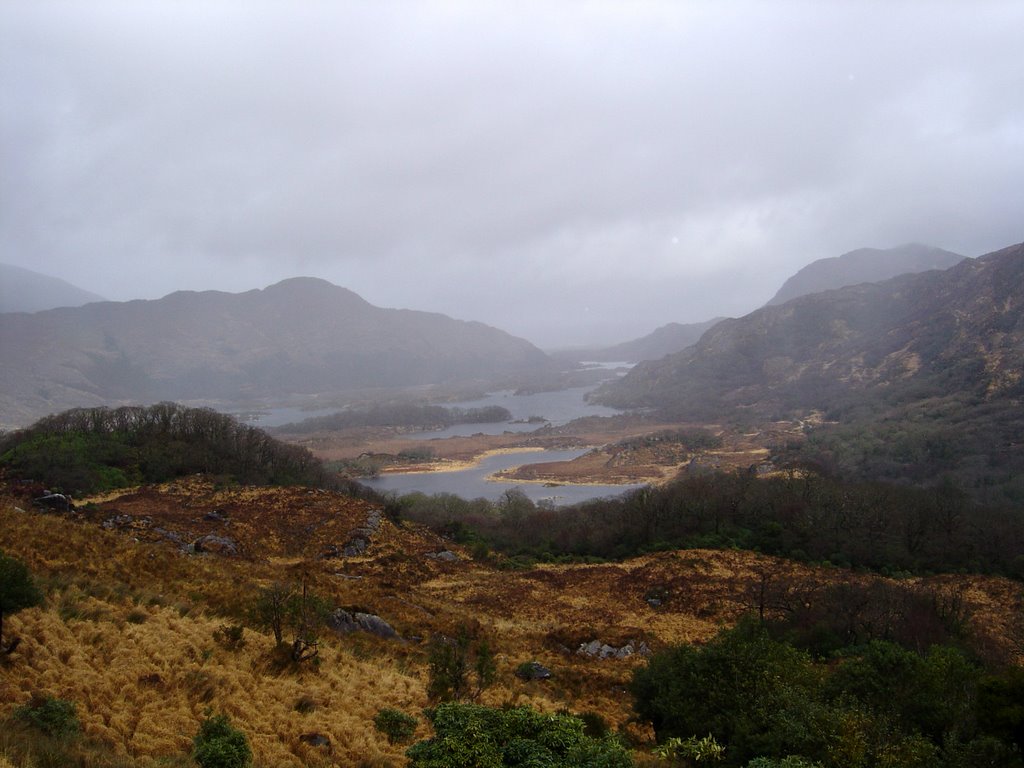
There we were last weekend, the wife and I and our little hire car, driving for miles and miles around the famous Ring of Kerry in the rain, the mist and the gloom. The weather was just awful, but we persisted - trying to see if we could spot the MacGillicuddy Reeks - Ireland's largest mountain range, and other landmarks for which this circular drive is so famous.
During a short break in the weather we did manage to spot the Ladies View (named apparently after Queen Victoria’s Ladies in Waiting) outside Killarney. Typically when I took the photo above I managed to miss the fine rainbow which had been there a moment beforehand.
At the westernmost point on the drive we diverted briefly and crossed the causeway to Valentia Island where we stopped at a tourist attraction called the "Skellig Experience". This exhibition (plus short film) celebrates the two small rocky islets, lashed by the Atlantic, about 10 kilometres from Valentia - although quite invisible in the ghastly weather. The larger of the two - Skellig Michael - is home to some 27,000 pairs of gannets and a lighthouse. It is also a UNESCO world heritage site, but not because of the gannets or the lighthouse. From 588 to 1222AD the place was inhabited by Irish monks. They created a stairway from the landing point up 200 metres to their stone “beehive” shelters which still survive today. For sheer, bloody-minded remoteness this is an extraordinary place to build a monastery, but as Lord Clark said "It was in places like Skellig Michael that Western Civilization was preserved." George Bernard Shaw described Skellig Michael as "an incredible, impossible, mad place. I tell you the thing does not belong to any world that you and I have lived and worked in; it is part of our dream world." It was sad that we came all this way and failed to see it for ourselves.
For the rest of the "Ring", there was little to be said. I had wanted to take the wife for a jaunting car ride through the Lakes of Killarney, but the weather said no. Muckross House seemed to be closed, and for long periods we followed tourist coaches through interminable, narrow roads. I even failed to appreciate the golf course at Waterville where the older brother distinguished himself on the celebrated 18th hole.
Monday, March 20, 2006
Alternative Employment
With mail order bookselling deep in the doldrums it is time to consider other ways of earning a living.
Becoming a politician would be nice - £56,000 for six months ranting and politicizing, and massive expense allowances. But I’m really the wrong gender. The big jobs in politics tend to go to the girls. Tessa Jowell was given a throne to sit on at the Test Match in Mumbai this morning – and I bet she didn’t fly out economy class. Ruth Kelly has claimed so much in expenses this year that she has virtually covered the cost of her constituency home purchased in 2001 (on top of her £134,000 salary). I’d love the money, but would feel that I was being less than honest with the taxpayer.
Not being strong in anything that demands sporting prowess I don’t feel that I’d get very far as a professional footballer. My rugby playing days are also long passed. But what about becoming a referee? Now I have the judgmental integrity to do the job but the eyesight isn’t what it used to be. This impediment never seems to stop partially-sighted people getting jobs as line judges at Wimbledon, and certainly the efforts of referee Mike Dean at yesterday evening’s Fulham-Chelsea match indicate that it doesn’t matter if you (and the linesman) completely fail to see a Chelsea player’s misdemeanour prior to scoring a goal. Eleven angry Fulham players quickly jostled round Mr Dean to complain and stayed there until he reversed his decision to award a goal (no wonder there was a pitch invasion afterwards).
While watching the Six Nations rugby it was also interesting to note that a decision is never final. Repeated delays while TV replays are studied make one wonder if a referee can ever be qualified to award a try. The linesmen also behave strangely. In the old days when a linesman raised his flag to say the ball is out of play, then play stops and a lineout is awarded. On Saturday a linesman raised his flag, ran a few paces and, seeing that the errant player was running on to score a try, he then lowered it again – as if to say “maybe it was, but let’s give him the benefit of the doubt”. I could do that.
Chef? Hairdresser? Car Wash Attendant? Traffic Warden? All too confusing. Maybe I’d better stick with books.
Sunday, March 19, 2006
Square-Eyed and Crestfallen
The Rugby Six Nations “Super Saturday” was a bit much for me. Three consecutive, televised matches (all fairly closely fought and all ending with the wrong result) were too much of an emotional drain. Unlike the England vs. France match the previous weekend I had not taken the precaution of dosing myself with large quantities of Dorset bitter and Australian red before the first kick-off. Accordingly I lasted the full eighty-minutes-times-three without even the shortest nap and ended up tired, head-achey, depressed and fed up with TV.
Anyway, well done France and Ireland, but what do we do about England? Oddly today's Sunday Times (Jeremy Guscott) and the Sunday Telegraph (Paul Ackford) agree that Andy Robinson must stay on for next year’s World Cup, but that he must change his coaching staff - particularly for the backs. Guscott named eight or nine uncapped players with great potential who might be considered, although Robinson is not known as a risk-taker. Ackford picked his dream team from all the Six Nations teams and there wasn’t an Englishman in sight. The New Zealander Sean Fitzpatrick (in the Sunday Times) described England as “one of the dullest teams on the planet, not just in its style of play but when it comes to applying a bit of grey matter when it counts”. Stern stuff, but on reflection is it not so far from the truth? Let’s hope for better stuff next year.
Next weekend we’re off to Ireland to see if the Emerald Isle is still celebrating threefold – the Triple Crown, St Patrick’s Day and a hugely successful Cheltenham. I’ve no doubt that there will be plenty of smiling faces over there and maybe, just maybe the weather will warm up a bit.
Saturday, March 18, 2006
Scientific Evidence
I don’t intend to cause my readers distresss when posting these blogs but just occasionally I cross someone’s nerve. An example was the day I mentioned a book called Red Herrings and White Elephants. I had been entertained by the author’s explanation of “freeze the balls off a brass monkey” (having to do apparently with brass trays to hold cannon balls on ships in the Napoleonic Wars). Now I didn’t mean to upset the metallurgists amongst my few readers (I didn’t realise that such people read blogs) but there ensued a chorus of “Balderdash” and “Piffle” and “How could you have be so stupid as to actually believe such patent nonsense!”. The metallurgists in refuting the explanation still couldn’t explain the derivation of “freeze the balls off a brass monkey” and nor, it seems, can anyone else.
Not to make the same mistake twice I have now acquired a new trivia book with undoubted pedigree for scientific accuracy – Does Anything Eat Wasps?* – a collection of questions and answers from the “Last Word” column in the New Scientist. Now I’m the last person to understand the physics of it all but I did enjoy the answers to the question whether or not you can safely drop a cat from any height and it will survive (because its terminal velocity is lower than the speed, etc., etc.). A survey has been carried out on injuries to cats who have fallen from varying heights and the conclusion is that if the cat falls from a building less than seven storeys high it should live; if the cat falls from a height in excess of seven storeys it should live; but if the cat falls from the seventh storey (no higher, no lower) it is statistically likely to perish. Falling onto concrete is not to be particularly recommended, and cats can survive falling from the 32nd floor of a building. (Sources: Papers published in the Journal of the American Veterinary Medicine Association and Nature).
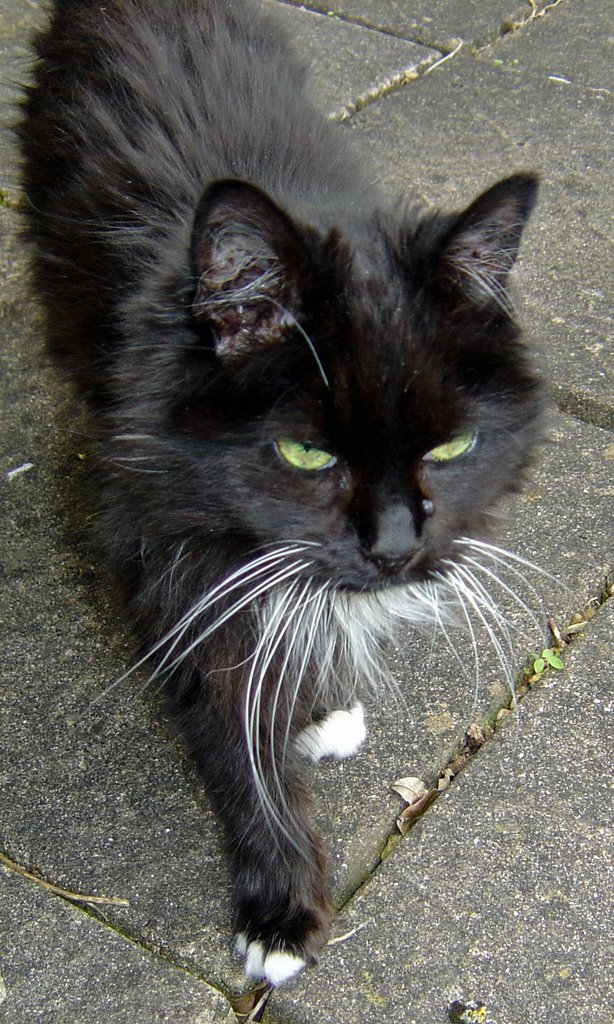
Since reading this piece (and laughing out loud at it) I have been getting some very strange looks from our ancient cat.
* Bears, frogs and fish (to name a few) eat wasps.
Tuesday, March 14, 2006
Waiting for Weight Loss
Okay, so I lost the script (for a couple of days).
Three weeks of dieting without any real progress (apart from my initial one-and-a-quarter stone loss) meant that drastic action was required and this took the form of Sunday lunch at the local.
Two pints of Palmers bitter instead of a starter, then the Roast Beef of Old England with all the trimmings – Yorkshire pudding, roast potatoes, carrots, cauliflower, parsnip, boiled potato, horseradish sauce and a bottle of Australian red wine.
Wonderful!
And then, by way of a finale, there was a generous helping of treacle tart and custard. It all makes you proud to be English as well as providing a suitable anaesthetic for the agony of the morning’s cricket (effectively losing the test match in Mohali) and then the afternoon’s rugby international in Paris. How content I was, snoring through England’s 31-6 thrashing by the French.
But now it’s back to work on the waistline.
It’s All in the Name (or Hanging Upside Down)
The annual Diagram Prize for the Oddest New Book Title has been awarded this year to the US publishers Red Wheel for People Who Don’t Know They’re Dead: How They Attach Themselves to Innocent Bystanders and What To Do About It by Gary Leon Hill. The title is so curious that the book has already achieved global sales of over 15,000 copies. Bit of a shame really as I had high hopes for a recent computer book published by Syngress Media and entitled Nessus, Snort, and Ethereal Power Tools which is a fine dissertation on aspects of Open Source security and obtainable (sometimes) through my illustrious organization. Fortunately however I didn’t have a bet on the Diagram Prize this year.
Talking about names it isn’t just the book title that can arouse curiosity. Sometimes the name of the author is enough to catch the eye of the casual browser. In recent weeks a book called The Traveller has been steadily climbing the mass market paperback charts. The hype is there – “International Bestseller – the new Da Vinci Code” – the publishers have given the book its own website www.traveler-book.com and so far it has reached number 17 in the mass market fiction charts. The author is John Twelve Hawks. Isn’t that brilliant? Why weren’t my children given memorable middle names like “Twenty-Eight” or “Sixty-Two”?
And talking about the Da Vinci Code I am getting great pleasure from reports of the plagiarism court case which is taking place in the High Court. My Mum has got around to reading Dan Brown’s bestseller and finds the plot badly constructed and the actual writing rather poor. She does come from a hard school of publishing however (Jonathan Cape in the company’s formative years). What fascinates me about the court case is the insight it gives into a best-selling author’s torment while writing.
Dan Brown started writing when he read a Sidney Sheldon thriller and thought “I can do better than that”. He claims that, like a musician, writing is something that must be practiced continuously and thus he writes seven-days-a-week. Physical fitness and stamina play a part (writing starts at 4.00am each day, and after each hour he does some press-ups and other exercises). On occasion he hangs upside-down using “suspension boots” to clear his brain or something. Maybe by hanging upside-down myself I’ll become a better blogger, but I’ll have to clear it with the wife first, otherwise I might experience difficulties reverting to the normal vertical standing position
Tuesday, March 07, 2006
London Book Fair
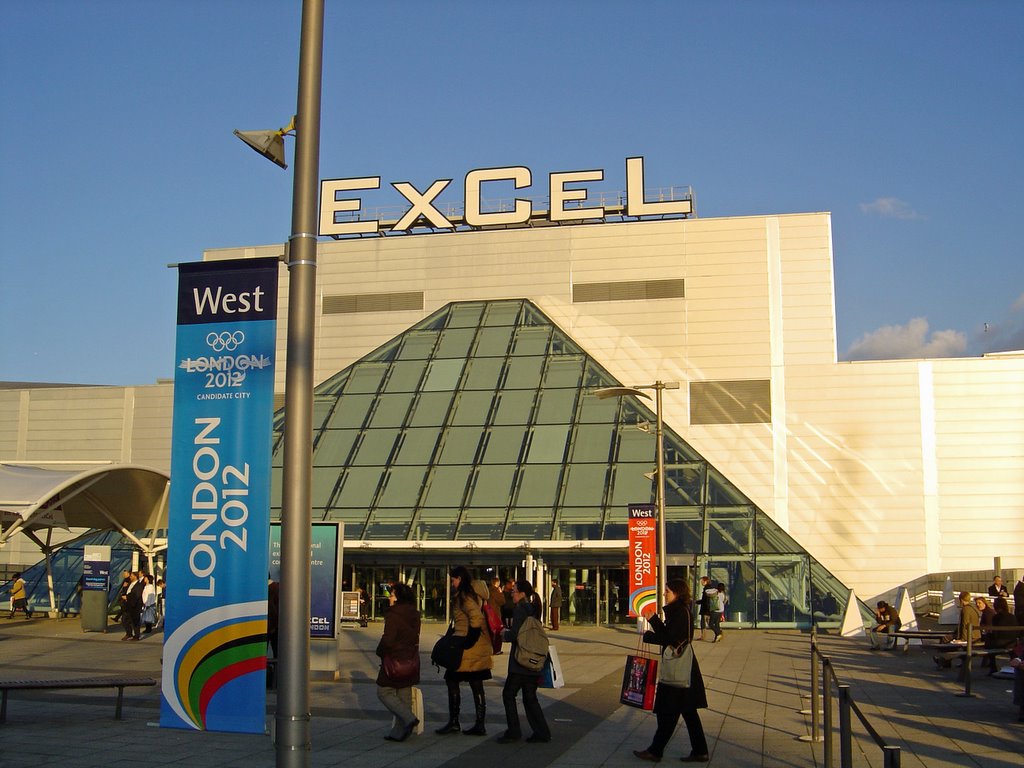
Like farmers coming to London for the annual Dairy Show, we booksellers make an annual pilgrimage to the London Book Fair which this year was held at the rather bleak new Excel centre in Docklands. The major publishers have impressive displays of their wares but, increasingly, this show is not for booksellers, but for the marketing of rights in books. Sure there were plenty of booksellers around and about (coaches had been organised to bring them in from the shires), but we're a dying breed as more and more book sales are channelled through Amazon and the supermarkets. Even Borders have announced awful trading figures in the UK and it is said that every bookshop in Britain has a "For Sale" sign outside.
And like a farmer up in town for a Dairy Show I tramped the acres of exhibits with mud still on my feet from an invigorating walk earlier in the day. All I was looking for was "novelty", new ideas which might bring fortune to my ailing business. There wasn't much to get excited about though. An Irish entrepreneur had brought along a smart vending machine for the top-selling paperbacks - the perfect twenty-four hour bookshop with low staffing overheads. An impressive stand from Cardoza - the "largest gaming and gambling publisher in the world" was doing business with instruction manuals on Texas Hold'em Poker tactics.
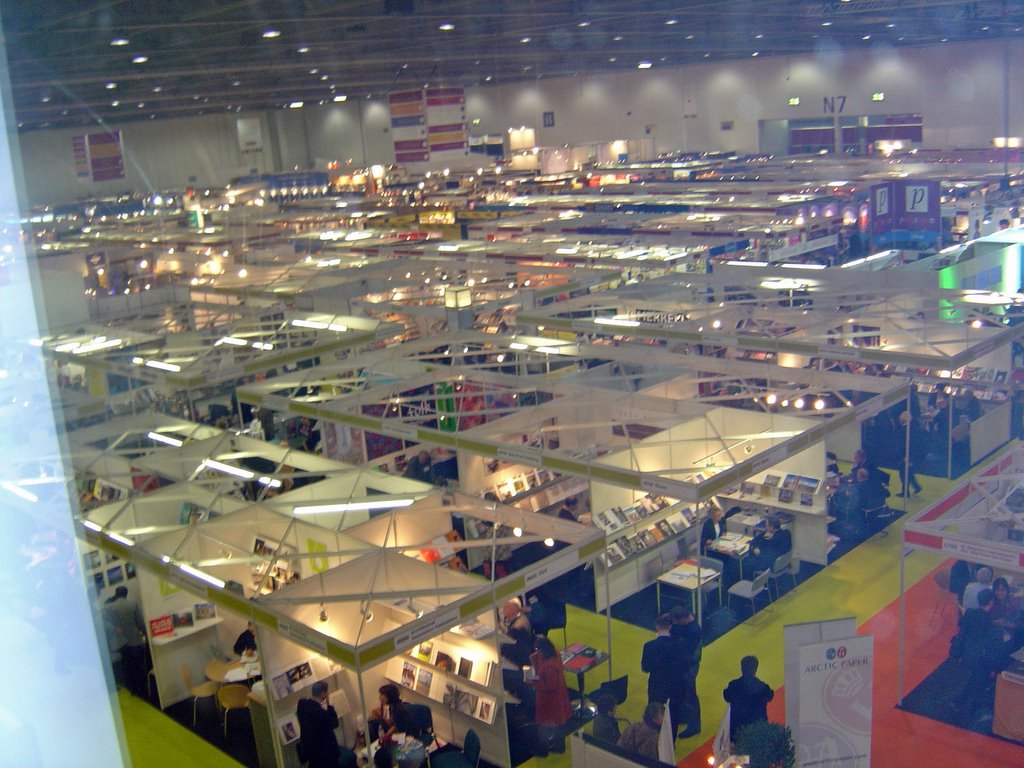
Google had an impressive display and were mounting a charm offensive to try and silence critics of their Google Book Search mission (where the Google searcher is actually searching every page of every book ever published). Whether or not their efforts will be rewarded is entirely up to the publishing community, but it is a brave initiative.
To cheer myself up I listened to a doomsday presentation given by Tim Renner, former CEO of Universal Music in Germany. His theme was "lessons booksellers and publishers can learn about the digitisation of content in the music industry", and lesson one was that an explosion in downloading of book content will certainly occur within the next eighteen months. Happily, if the music industry is anything to go by, the book publishing industry shouldn't lose more than half of their annual revenues and there will still be room for good, well-produced, physical books in the world after the book-equivalents of Napster and the iPod have taken their toll.
Ah well!
Thursday, March 02, 2006
A Word about Uncles and Aunts
Now when I talk about my family there is a risk of my coming over all HMS Pinafore –
“I am the monarch of the sea,
The ruler of the Queen's Navee,
Whose praise Great Britain loudly chants.”
“And we are his sisters, and his cousins, and his aunts!”
Okay so I have only the one sister, but throughout my near-on sixty years I have enjoyed the company and friendship of a splendid assortment of cousins, and some formidable aunts (and uncles, too). Sadly with the passing of Aunt Ruth last week (sometimes referred to as Great Aunt Chelmsford) my brothers and sister and I no longer have any aunts (or uncles) and one cannot but feel that some sort of intangible prop has been taken from our lives. Here are a few poorly phrased memories of some of those wonderful people.
My father was the youngest of six children – three girls, three boys. Of these one of his sisters (Freda) died young and his eldest brother, Leslie, went to New Zealand and I have no recollection of him. This left my Uncle John who was always regarded as the “senior member” of the family. He was a very successful businessman and impressed his nephew enormously with a taste for large, expensive cars (both British and American). In his later years we got to know him better and thoroughly approved his quick-witted incisiveness and the gourmet fare offered to his pet animals.
My Aunt Jane was closest in age to my Father and often surprised us by referring to Dad as “Timmy” – a pet nickname which only she ever used. Jane painted for a hobby and her “pheasants” were well known in the family. Then there was Auntie Dickie a marvellous personality who lived in an elegant flat in South Kensington surrounded by exquisite oriental antiques. Dickie was a constant and brave traveller, preferring to holiday in Skopje or Sarajevo than France or Spain. She would have been saddened by the death last month of the wrestler Jackie Pallo as she was occasionally to be found in the boxes of the Royal Albert Hall in the 1960s enjoying watching wrestling bouts with her friends.
My mother had two older sisters, both towering personalities. Mary (Great Aunt Haslemere or “Zia”) was the oldest and married Robert Lochner, the man credited with inventing Mulberry Harbour (in his bath). A sparkling personality with a keen sense of fun, Mary was elected a County Councillor for West Sussex, a post she held for many years, and was later made Deputy Lord Lieutenant of the county. My mother’s second sister Ruth, who died last week, was another commanding personality. The words that come to mind are “razor-sharp”, “hugely kind and generous”, “great sense of humour”. Bed-ridden for the last few years of her life, she was enormously brave and more than anything else “whole-hearted”. She will be sorely missed. They will all be sorely missed.
Tuesday, February 28, 2006
Dover Beach-Combing
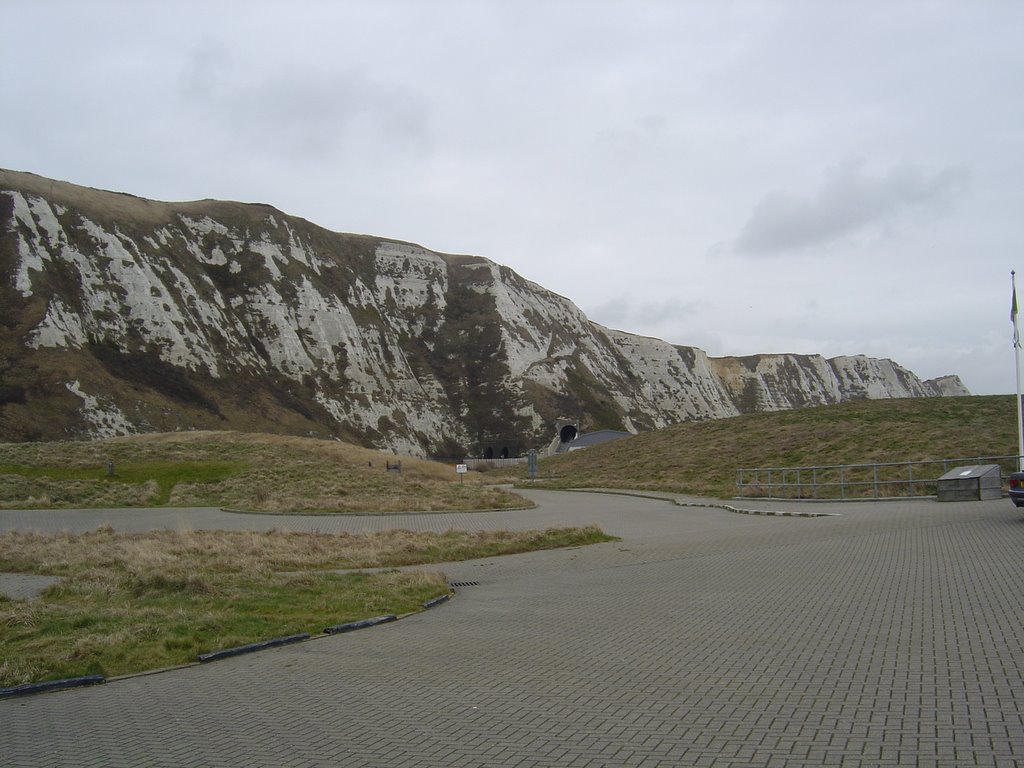
The wife and I went to France at the weekend using my £19 each way Speedferries tickets. Utterly punctual, clean and efficient in each direction, the Australian-built hovercraft “Speedferries One” shuttles back and forth from Dover to Boulogne and there is talk of a “Speedferries Two” joining the fleet in a few months. It makes a pleasant change from the monotony of the channel tunnel crossing, especially as you are allowed outdoors during the crossing to get the wind in your face and a proper feel for the sea.
The only slight drawback is that Speedferries have a small number of crossings each day so if you arrive early you have to hang around a bit – unlike the tunnel where you stand a good chance of getting aboard an earlier train. Having arrived early for our outward crossing we sniffed around for some entertainment in the region and found the strange Samphire Hoe, an area of natural beauty nestling at the foot of the towering cliffs (signposted off the main A20 a mile outside Dover heading towards Folkestone).
Being an Essex boy Samphire Hoe is my sort of place. In the way that Essex gravel pits get turned into golf courses, so this little strand of Kent has been shaped(and re-shaped) by man over the past two hundred years. At first glance you see (and read on the information boards) that the area has been recently formed from the 4.9 million cubic metres of chalk marl which were excavated during the construction of the channel tunnel (our side only). The marl has been carefully landscaped to make joyful nature trails amongst the hillocks and there is a café/tourist centre in the parking area as well as a memorial to those who lost their lives during the building of the tunnel.
A bit more research however reveals that this is also the site of an ill-fated coal-mining operation which lasted from 1895 to 1921 during which time only 120 tons of coal were produced. Before that there had been an early Channel Tunnel attempt by a Colonel Beaumont in 1845. This went 2000 yards before the project was abandoned, perhaps over concerns that the French would use the tunnel to launch an invasion (damned right they would). A couple of years before the tunnel attempt a huge section of the cliff had been dynamited out to provide the platform for the Folkestone-Dover railway which is still used today. More recently in the 1970s the existing single-track road tunnel through the cliff from the A20 was created and an earlier version of the Channel Tunnel was attempted. This time only 300 meters were excavated before the government withdrew funding.
I haven’t had time to figure out the channel swimmers who might have set off or landed at that point, or the early aviators in their flying machines. I did find out that Samphire Hoe is nicknamed Fisherman’s Foe by local anglers (because of the way that the chalk marl cuts away fishing tackle), and that it is a fairly good area for shipwrecks. All-in-all a pretty full history for a nature conserve.
Friday, February 17, 2006
Recent Books
The Return of The Dancing Master
Henning Mankell
It’s
Michelin Guide
Now that the
Naked Conversations
How Blogs are Changing the Way Businesses Talk with Customers
Robert Scoble & Shel
Very rarely do I read the books I sell (I’ve never been over-interested in the way computers work) but I did pick up this one which evangelises corporate blogging and is more of a business book than a computer book anyway. Now corporate blogging could be a good idea and there are certainly some convincing examples of how blogs can alter a company’s interface with its customers. On the other hand it might just be a bit of hogwash which will act as a 5-minute wonder before blogging becomes a thing of the past. The authors’ enthusiasm leads me to think that there is a message there and I’m going to give it a go. You can preview my early draft on a new site http://spaces.msn.com/booksinspace/ but don’t get carried away.
Le Guide: Selected Autoroutes
Karol Libura
Unless you have a caravan or a baby, or are in constant need of SOS telephones when driving in
Wednesday, February 15, 2006
Breast reduction
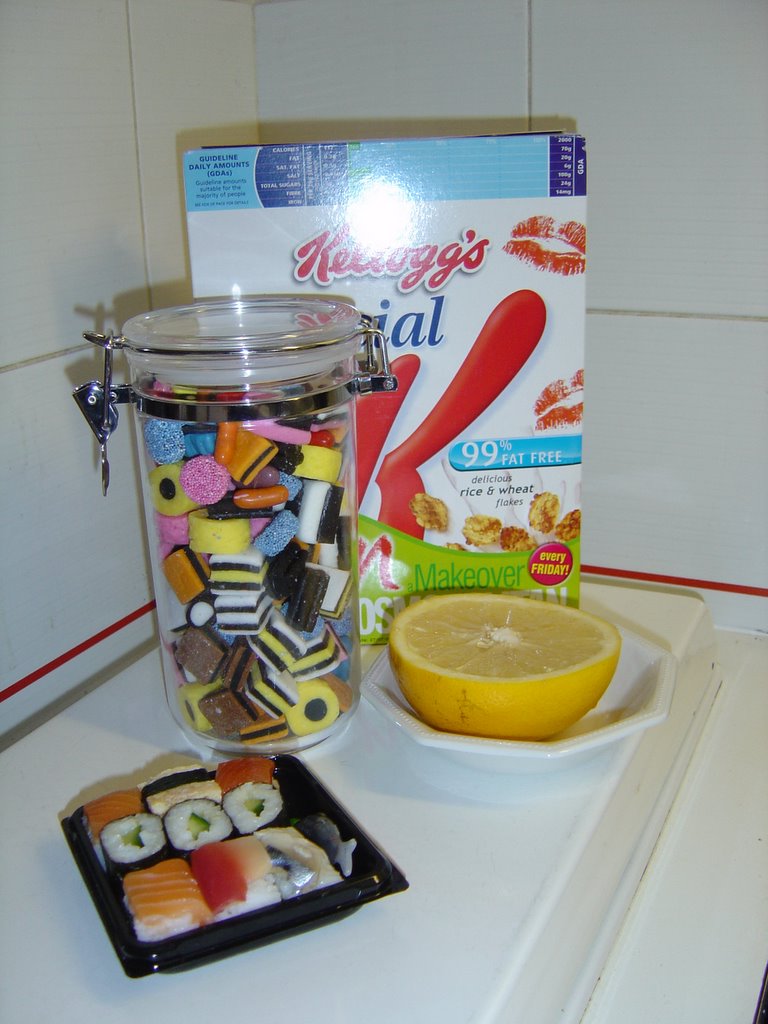 The diet continues and amongst the ups and downs I can report the loss of the first stone. The wife is convinced that most of my weight loss is mammarial but I reckon that one of my several chins is looking a bit depleted. Somewhat astonishingly the main pillars of the regime are still intact – no bread, no potatoes, no alcohol, and (more astonishingly) no Cheeselets, Twiglets, crisps, Roka cheese whatevers, etc, etc. The wife is also participating and the only really sinful indulgence continues to be our regular intake of liquorice allsorts each evening. Still, it won’t last!
While we're on the subject of walking the wife has presented me with a Valentine's Day gift of a very small pedometer to attach to my belt. As well as measuring the miles (or kilometres) I walk at any time, the gadget also serves as a clock, a stopwatch, a heart-rate monitor, a step counter and a pulse counter. With all this going on it is hardly surprising that neither of us can get the thing to work - even though we endeavoured to input my weight, my "stride distance" and the time (selecting 24-hour clock or am/pm). At first the darned thing reckoned that whenever I took a step forward it would reset itself to zero (including my weight, my "stride distance" and the time). Now the darned thing seems to have jammed on 3,179 paces and won't budge at all. Anyway it is not for me to be ungrateful for such a thoughtful present, but I hope the small pot of roses that I reciprocally gave to the wife doesn't cause so much trouble.
Friday, February 10, 2006
Gassing On About Oil Companies

It’s been an unusually active Friday morning in our village cul-de-sac. The recycling (red) wheely bin had to go out early for the dustcart; the last of the Christmas bills came through in a “bills only” post delivery from Royal Mail; and we took delivery of yet another batch of liquid gas to satisfy the huge thirst of our Aga cooker and heating system.
Thursday, February 09, 2006
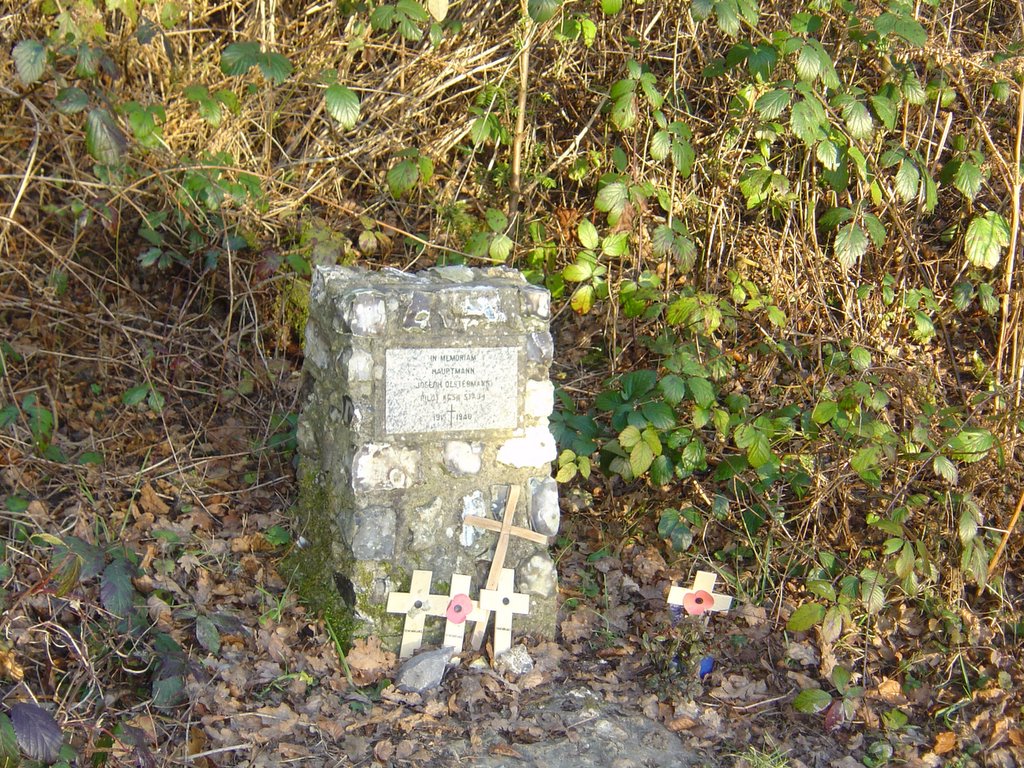
Hauptmann Joseph Oestermann
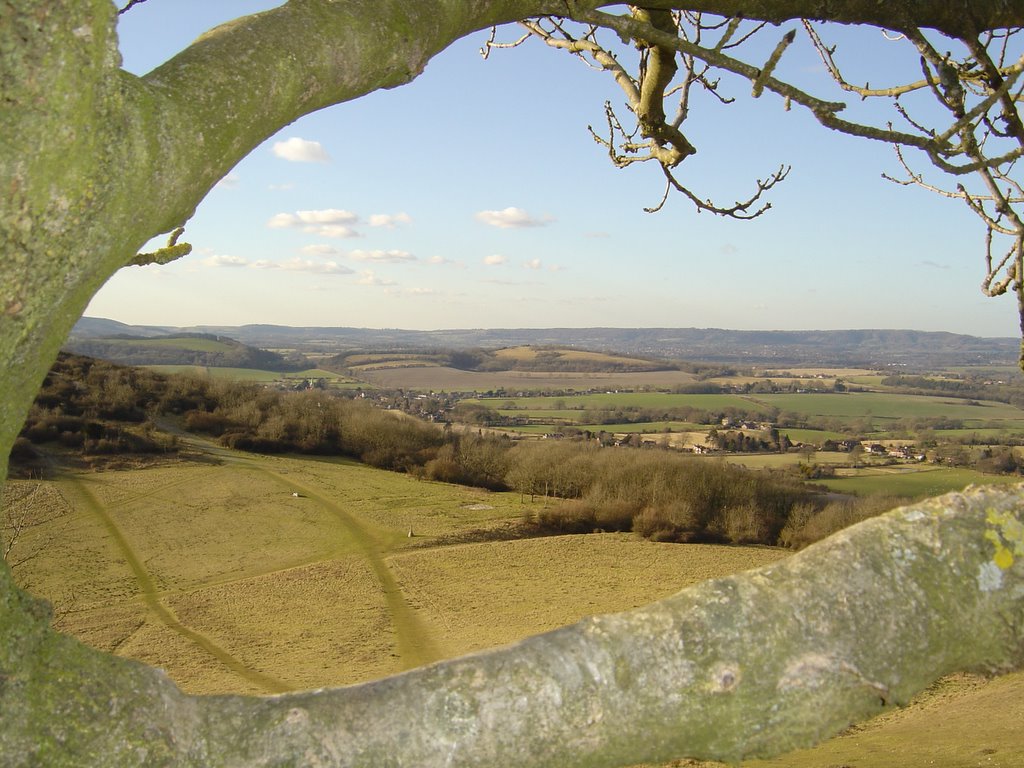
The man on the Flora Margarine advertisement suggests that you should do something that scares you a little every day. Well, I climbed Beacon Hill on the
Wednesday, February 08, 2006
Fried Tuna
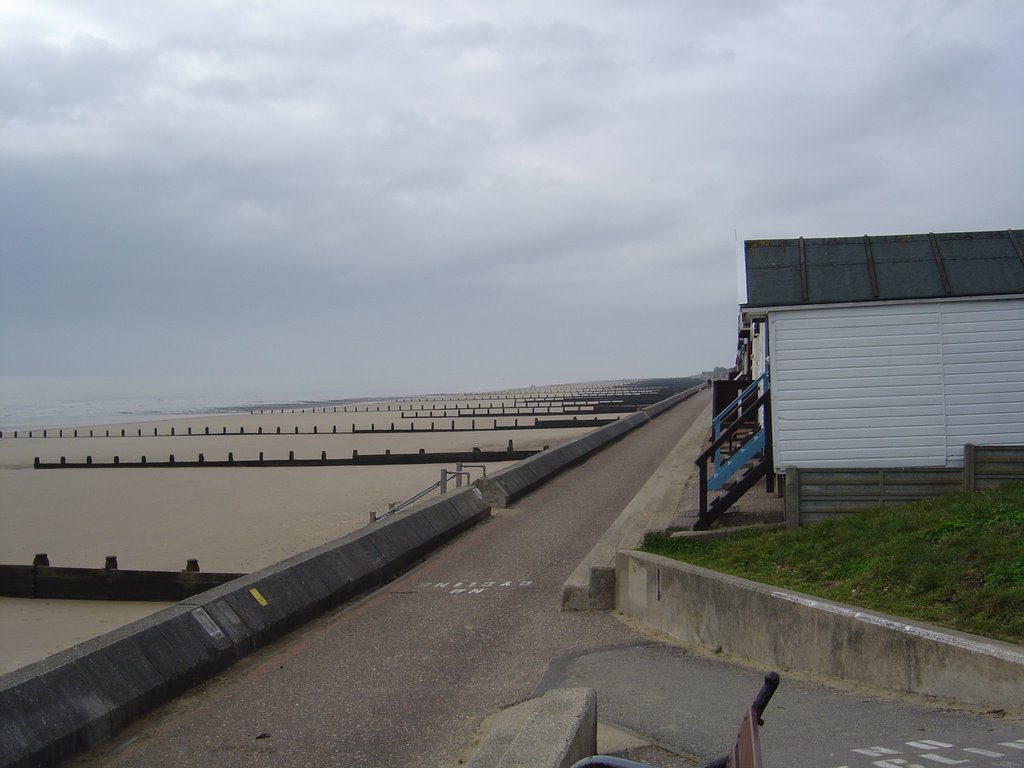
Last weekend was spent at Frinton-on-Sea visiting my mother and looking around the town. At this time of year the mile-long, sandy beach is virtually deserted apart from the odd dog-walker, the odd horse, and the odd elderly bookseller shuffling along whilst he contemplates life’s miseries. The end-to-end walk passes the best part of 700 beach-huts and, being Frinton, only a few huts have names - Barb’s Place, Yer’Tis and (inevitably) Jabba the Hutt being random examples
Odd to think that at the time of the Napoleonic Wars Frinton consisted of just a small church, the long-since-submerged Frinton Hall and a Martello tower. The tower was never garrisoned because it was reckoned to be an unhealthy place with malaria-infested marshes. The Victorians created the resort and, apart from the little old church at the bottom of Connaught Avenue the town is now all Victorian or later. Ursula Bloom the novelist lived there. Ernest Luff (he who sang the first recorded Oh, For The Wings of a Dove when a child) ran his Christian bookshop and cycled around the town. Arthur Havers was the golf club professional in my childhood (he was Open Champion in 1923 at Royal Troon), and there is a Sherlock Holmes connection. But it mainly for its conservatism that Frinton is known – the resistance to buses and pubs, no ice cream sellers on the beach, no slot machine arcades, no candy floss.
Nowadays there are two Frintons, one on each side of the railway line and its famous level crossing which operates as a sort of frontier border control. Those on the easterly (sea) side of the line are the real Frintonians but there is actually more Frinton housing and there are more Frinton residents to be found on the less-fancied side of the railway track – miles of carefully tended bungalows in roads like Freituna Way, running most of the way into neighbouring Walton-on-the-Naze. For myself I am very fond of the stylish Art Deco houses which form just a fraction of the planned Frinton Park Estate to the north of the town. Less than thirty of these houses were ever built including the famous Round House (originally the Sales and Information Office for the estate), but the original plan was for 1,100 of them.
Last words on Frinton come from the window of the Olive Luff Bookshop in
As she remained long at prayer before the LORD, Eli watched her mouth,
for Hannah was praying silently; though her lips were moving, her voice could not be heard. Eli, thinking her drunk, said to her, "How long will you make a drunken show of yourself? Sober up from your wine!"
“It isn't that, my lord," Hannah answered. "I am an unhappy woman. I have had neither wine nor liquor; I was only pouring out my troubles to the LORD.”
And this reminds me to give news of my diet. Like Hannah I have had neither wine nor liquor, nor have I had bread or potatoes for more than two weeks. After my last report of a half-stone loss things have quietened down a bit. At my last visit to the scales I weighed in at 16 stone, 10 pounds. A long way to go, still.
Subscribe to:
Posts (Atom)